Sulfuric Acid Heat Exchanger Thermal Efficiency (%) Simulation
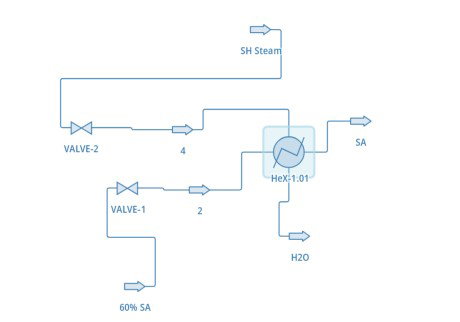
In this simulation, we used inlet streams of 60% Sulfuric Acid (40% diluted with water) and a hot steam inlet.
The results captured were Maximum Heat Exchange, Thermal Efficiency, and LMTD. The main goal was to see maximum thermal efficiency for scalability and optimal production yield.
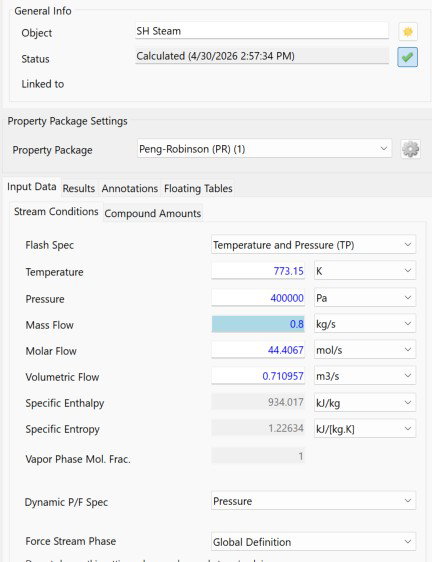
This image displays our steam inlet stream where our temperature is a high 500 C (773.15 K). This could be an issue that we need to adjust. The pressure is not staggering enough to cause an error but if needed, we can adjust using a valve on the inlet to improve efficiency. Flow may be adjusted if it makes sense from an economic and production standpoint to offset temperature/pressure theoretical costs.
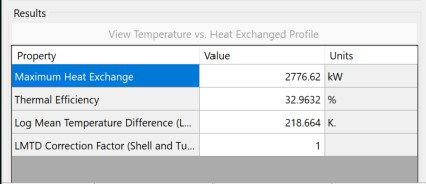
The initial simulation saw these results. The main concern was the low thermal efficiency accompanied by a high LMTD which indicates the simulation has the capability to have a high and optimal heat exchange but some oof our factors are non-optimal, causing low efficiency.
To offset this issue, we had to adjust mainly the steam inlet factors which we can use temperature and valve adjustments.
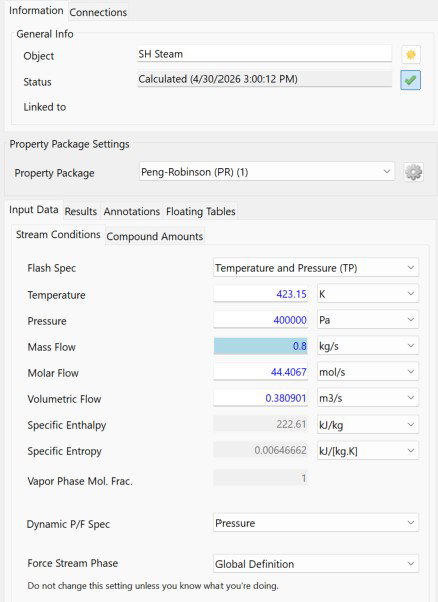
Steam inlet stream was adjusted to meet optimal temperature for heat exchange efficiency and also reduces heating costs assuming we are not using abnormally high steam from another process in theoretical industrial environment.
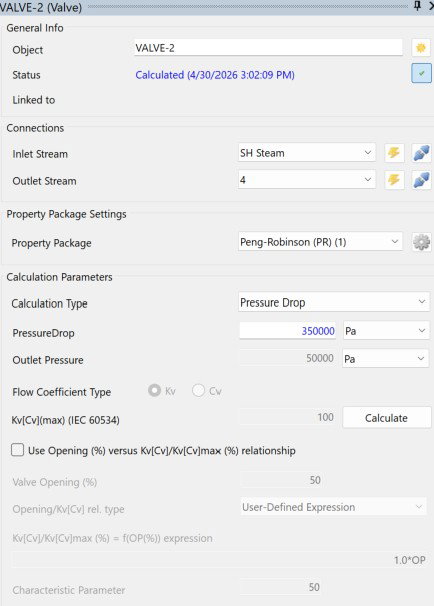
We adjust our inlet steam valve to drop the pressure by ~70%. From a process standpoint, we adjusted our pressure of steam due to increased thermal efficiency by 2-4%.
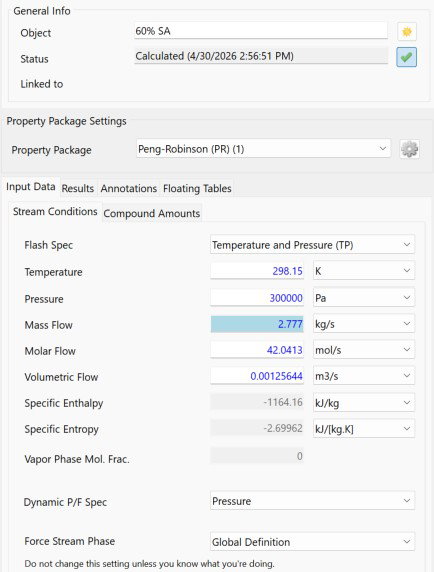
For reference, our sulfuric acid inlet stream temperature and pressure changed marginally, with little effect on overall results because the main contributing factor in our efficiency calculations was the steam.
Results of these improvements are shown below.
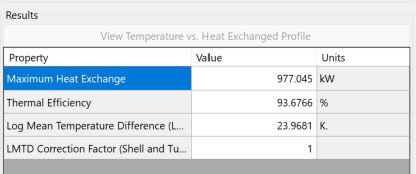
We see a drop in maximum heat exchange due to adjustments, but for our simulation, this Qmax is generally safe. We saw a very sizable increase in thermal efficiency which is a huge improvement to our heat exchange process. This accompanied by a safe LMTD has overall improved our heat exchanger.
Thermal efficiency improved by 80.6 percentage points (a 7.15× increase), from 13.09% to 93.67%, by balancing stream mass flow rates and reducing the temperature approach across the heat exchanger.